
What Is a Grounding System? Why Is It Vital for Your Safety?
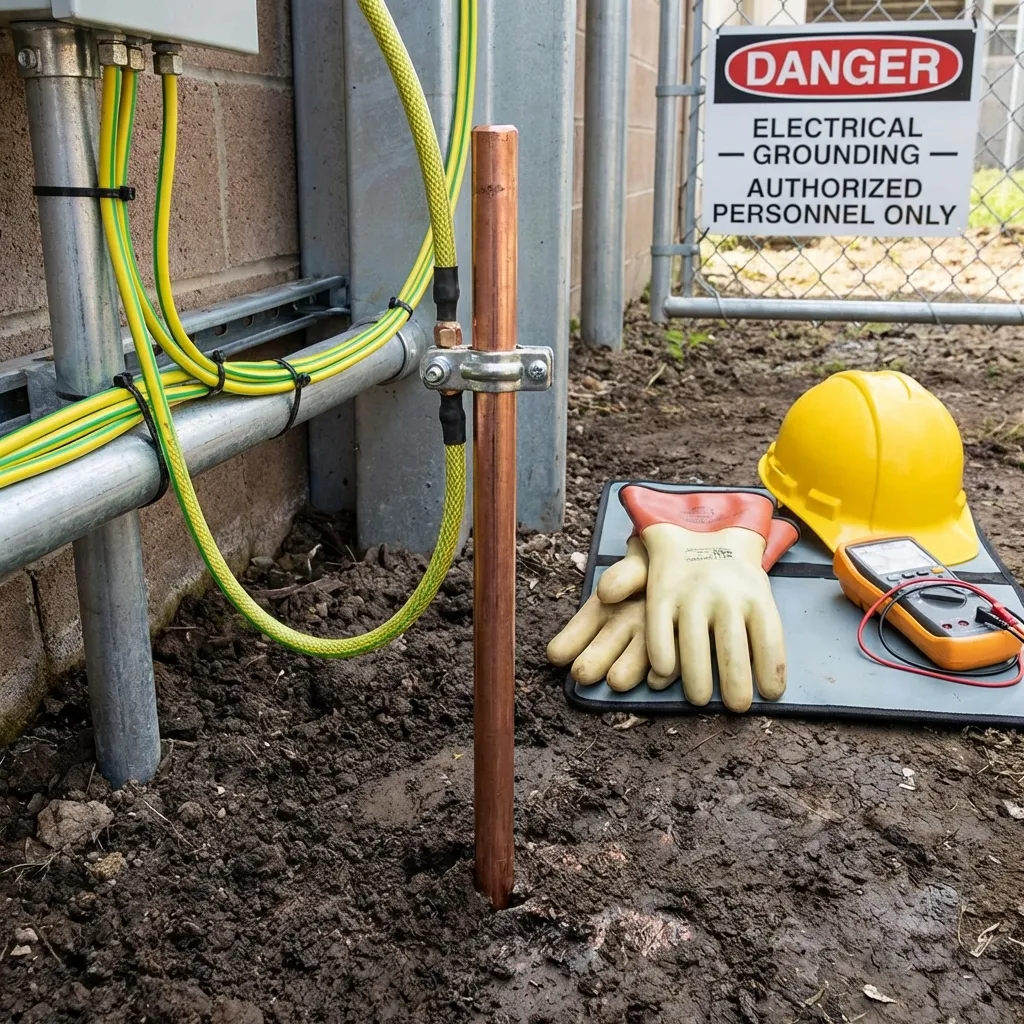
A grounding system is the most critical safety component of an electrical installation and serves a life-saving function. Unfortunately, in many homes and workplaces in Turkey, the grounding system is either absent or inadequate. Especially in areas of Antalya with a large stock of older buildings, this situation poses a serious risk to personal safety. In this guide, we will explain in detail what a grounding system is, how it works, why it is important, and how the installation process works.
What Is Grounding?
Grounding is an electrical safety system that ensures leakage currents in an electrical installation are safely conducted to the earth. Under normal conditions, electric current flows from the live (phase) wire, passes through the appliance, and returns via the neutral wire. However, in the event of a fault (insulation failure, moisture contact, etc.), some of the current may leak to the appliance casing or metal parts.
The grounding system captures this leakage current and conducts it to the earth through a low-resistance path. This means:
- Dangerous voltage on the appliance casing is discharged to the ground
- The residual current device (RCD) trips and cuts the circuit
- The user is protected from electric shock
Why Is Grounding So Important?
1. Prevents Electric Shock
In an ungrounded installation, if you touch the casing of a faulty appliance, the electric current will attempt to reach the ground through your body. The resistance of the human body is approximately 1,000-2,000 ohms, and a current above 30 milliamps (mA) can be lethal. At 230V mains voltage, this threshold can easily be exceeded.
A grounding system, however, provides a very low-resistance path (ideally below 2 ohms). The leakage current prefers this low-resistance path and does not pass through the human body.
2. Reduces Fire Risk
In an ungrounded system, leakage current causes heating at the point where it flows. This heating can ignite flammable materials. The fire risk is particularly high with cables inside walls or in wooden structures. Grounding eliminates this risk by safely conducting leakage current to the earth.
3. Protects Electronic Devices
Lightning strikes or mains-related voltage surges can damage electronic devices. A well-designed grounding system safely conducts this excess energy to the earth, protecting computers, televisions, and other sensitive equipment.
4. Enables the RCD to Function Properly
A residual current device (RCD/RCCB) operates by measuring the current difference between the live and neutral wires. Without a grounding system, the leakage current circuit cannot be completed, and the RCD may not function correctly. Grounding combined with an RCD provides maximum protection.
5. Dissipates Static Electricity
Static electricity builds up especially in dry weather and on synthetic flooring. The grounding system continuously dissipates this static charge to the earth, preventing uncomfortable static shocks. It also protects sensitive electronic devices from static electricity damage.
Components of a Grounding System
1. Grounding Electrode (Rod)
This is a metal rod driven into the ground. Its characteristics:
- Typically 1.5-2.5 metres in length
- Copper-clad steel or galvanised steel material
- Minimum 16mm cross-section
- Must be placed in moist, conductive soil
- Multiple rods may be needed in rocky or dry soil
2. Grounding Cable
This is the cable connecting the grounding electrode to the distribution panel:
- Yellow-green colour coded (international standard)
- Copper conductor, minimum 16mm cross-section (main line)
- Minimum 2.5mm for appliance grounding
- Protective sheathing or PVC insulation
3. Grounding Main Terminal
This is the connection point at the grounding electrode:
- Copper or brass material
- Corrosion resistant
- Accessible location with an inspection cover
4. Grounding Bar (Busbar)
A copper busbar located in the main panel where all grounding lines converge:
- Main grounding line connection
- Individual circuit grounding connections
- Screw or clamp connection points
5. Equipotential Bonding
This involves connecting metal parts within the building (water pipes, gas pipes, heating pipes) to the grounding system. This ensures all metal parts are kept at the same electrical potential, preventing dangerous voltage differences between them.
Grounding Resistance and Measurement
The effectiveness of a grounding system is measured by its earth resistance. The lower the resistance, the better the protection:
- Ideal value: Below 2 ohms - Excellent protection
- Acceptable: 2-10 ohms - Adequate protection
- Insufficient: Above 10 ohms - Improvement required
- Dangerous: Above 25 ohms - Urgent intervention required
Grounding resistance is affected by the following factors:
- Soil composition (sand, clay, rock)
- Soil moisture
- Electrode depth
- Number and arrangement of electrodes
- Seasonal variations
Measurement frequency: A professional grounding measurement should be performed at least once a year. Resistance may increase particularly in summer when the soil dries out.
Types of Grounding Systems
TN-S System
The neutral and protective earth (PE) conductors are separate throughout the entire system. This is the safest system and is preferred in new buildings.
TN-C-S System
Combined conductors on the utility side, separate conductors within the building. This is the most commonly used system in Turkey.
TT System
Each building has its own independent grounding. This is found in rural areas and older buildings.
Grounding Issues in Older Buildings
Most buildings constructed before 1990 either lack a grounding system or have one that does not meet current standards. In these buildings:
- Two-pin (ungrounded) sockets were used
- No grounding cable was installed
- No grounding electrode exists or it has deteriorated
- No equipotential bonding was performed
Solution: Have a professional electrician carry out a grounding measurement. If necessary, install a new grounding system to ensure your personal safety.
Dangerous Practices
- Neutral as earth (bootleg ground): If the neutral wire is broken or reversed, this can be fatal. Never do this!
- Grounding to water pipes: This is unreliable because plastic pipes are now widely used.
- Undersized grounding cable: Cannot carry leakage current, overheats, and may cause fire.
Grounding Measurement and Installation
Call us for professional grounding measurement and installation services in Antalya. We inspect your electrical system with modern measurement equipment and install new grounding systems when needed.
0507 415 29 92
