
Energy Savings with LED Lighting: Comprehensive Guide
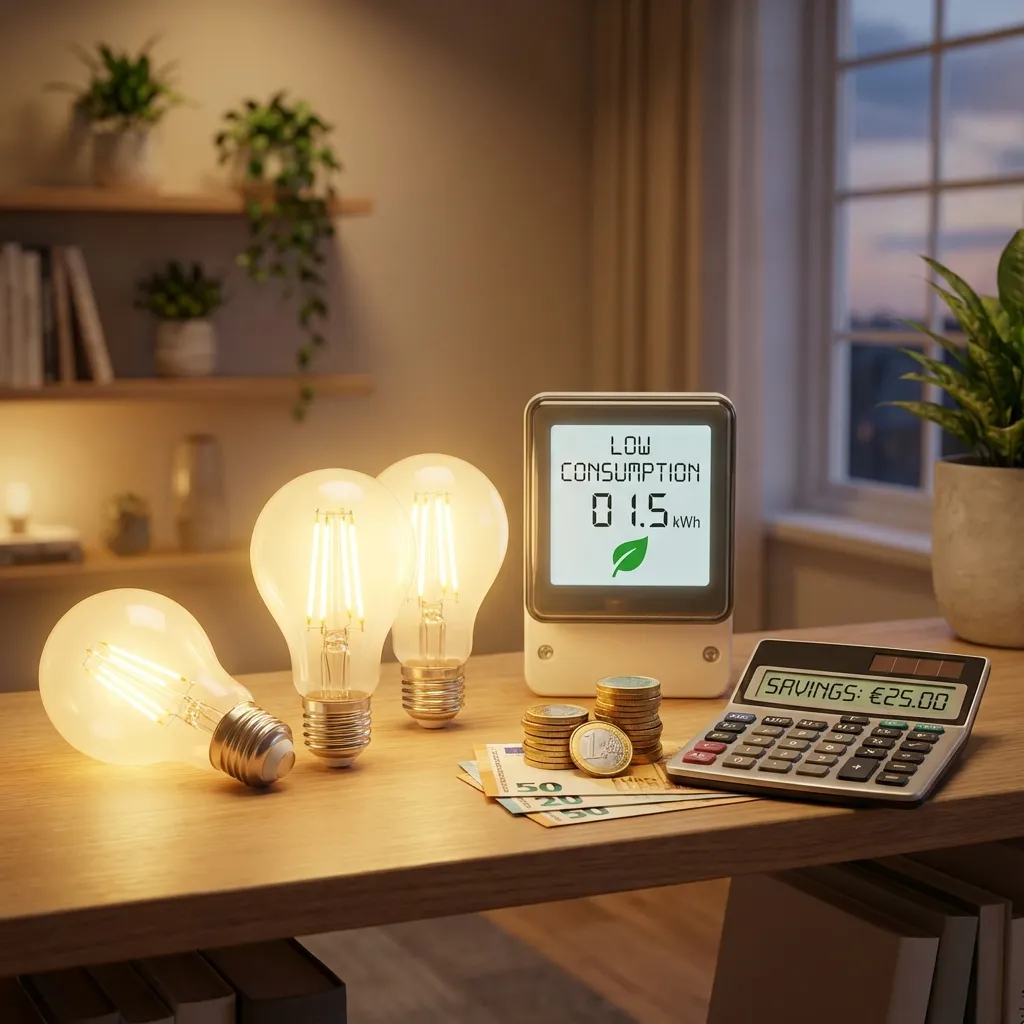
As electricity bills rise every year, energy-saving methods are becoming increasingly important. One of the easiest and most effective ways to save energy in homes and workplaces is switching to LED lighting. LED technology consumes 80-90% less energy than traditional incandescent bulbs and lasts significantly longer. In this comprehensive guide, we will cover the advantages of LED lighting, savings calculations, and how to choose the right LED bulbs.
What Is LED Technology?
LED (Light Emitting Diode) is a semiconductor electronic component that produces light when electric current passes through it. While traditional incandescent bulbs convert electricity into heat and then heat into light, LED technology converts electricity directly into light. This fundamental difference explains why LEDs are so efficient.
Incandescent Bulb vs LED Comparison
- Incandescent bulb: 90% of energy is converted to heat, only 10% to light
- LED bulb: 80-90% of energy is converted to light, only 10-20% to heat
This efficiency difference means that LEDs consume far less electricity for the same amount of light.
Advantages of LED Lighting
1. Outstanding Energy Savings
LED bulbs consume 80-90% less energy than incandescent bulbs to provide the same brightness. For example:
- 8-10W LED instead of a 60W incandescent bulb
- 12-14W LED instead of a 100W incandescent bulb
- 18-20W LED instead of a 150W incandescent bulb
These savings are directly reflected in your electricity bill. The difference is especially noticeable in living rooms, kitchens, and office lighting that are used for extended periods.
2. Extremely Long Lifespan
The lifespan of LED bulbs is incomparably longer than other bulb types:
- Incandescent bulb: 1,000-2,000 hours
- Halogen bulb: 2,000-4,000 hours
- Compact fluorescent (CFL): 8,000-15,000 hours
- LED bulb: 25,000-50,000 hours
With 8 hours of daily use, a single LED bulb can last 8-15 years. During that time, you would need to replace dozens of incandescent bulbs.
3. Low Heat Output
Incandescent bulbs get hot enough to cause burns (200-300 degrees C surface temperature). LED bulbs generate much less heat (50-80 degrees C). This means:
- Reduced fire risk
- Lower air conditioning load (especially in summer)
- Safe use in enclosed fixtures
- Safer for children
4. Instant Full Brightness
Compact fluorescent (energy-saving) bulbs take a few minutes to reach full brightness. LED bulbs provide 100% brightness the moment they are turned on. This feature is especially important in corridors, stairways, and bathrooms where lighting is used briefly.
5. Environmentally Friendly
Environmental advantages of LED bulbs:
- Contains no mercury or other hazardous substances (unlike CFL bulbs)
- Lower energy consumption = lower carbon emissions
- Longer lifespan = less waste
- Most components are recyclable
6. Durability
Since LED bulbs use solid-state technology:
- Resistant to vibration (ideal for doorways and garages)
- Impact resistant
- Frequent on/off switching does not affect lifespan
- Works flawlessly even at low temperatures
7. Design Flexibility
Thanks to the compact size of LED technology:
- Available in shapes and sizes to fit any fixture
- LED strip lighting for decorative purposes
- Directional spot lighting
- Colour-changing (RGB) versions available
LED Savings Calculation
Let us calculate how much switching to LED saves with a concrete example:
Example Scenario
A home uses 10 incandescent bulbs at 60W each, running an average of 5 hours per day.
Consumption with Incandescent Bulbs:
- Daily: 10 bulbs x 60W x 5 hours = 3,000 Wh = 3 kWh
- Monthly: 3 kWh x 30 days = 90 kWh
- Annual: 90 kWh x 12 months = 1,080 kWh
Consumption with LED Bulbs (9W LED = 60W incandescent):
- Daily: 10 bulbs x 9W x 5 hours = 450 Wh = 0.45 kWh
- Monthly: 0.45 kWh x 30 days = 13.5 kWh
- Annual: 13.5 kWh x 12 months = 162 kWh
Savings:
- Annual energy savings: 1,080 - 162 = 918 kWh
- Savings rate: 85%
Return on Investment
LED bulbs have a higher upfront cost, but the savings and long lifespan quickly offset this:
- Cost of 10 quality LED bulbs: approximately 500 TL
- Annual energy savings (at 3 TL per kWh): 918 x 3 = 2,754 TL
- Payback period: 500 / 2,754 = approximately 2.2 months
In other words, the LED bulb investment pays for itself in about 2 months!
How to Choose the Right LED Bulb
1. Lumen Value (Brightness)
When choosing LEDs, look at the lumen value rather than wattage. Watts only indicate energy consumption; for brightness, the lumen value is what matters:
- 450 lumens = equivalent to a 40W incandescent
- 800 lumens = equivalent to a 60W incandescent
- 1,100 lumens = equivalent to a 75W incandescent
- 1,600 lumens = equivalent to a 100W incandescent
2. Colour Temperature (Kelvin)
- 2700K Warm White: Yellowish light similar to incandescent bulbs, relaxing. Ideal for bedrooms and living rooms.
- 4000K Natural White: Close to daylight, balanced. Suitable for kitchens, bathrooms, and offices.
- 6500K Cool White: Bluish white, energizing. Preferred for garages, storage rooms, and workshops.
3. CRI Value
CRI (Colour Rendering Index) measures how naturally a light source renders colours. It should be at least 80, with 90+ being preferred.
4. Socket Type
Choose the socket type that fits your existing fixture: E27 (standard), E14 (small), GU10 (spot), G9 (capsule).
5. Dimmer Compatibility
If you plan to use a dimmer, choose LEDs labelled "dimmable". Regular LEDs will flicker or fail to work with a dimmer.
Tips for Switching to LED Lighting
- Gradual transition: You do not need to replace all bulbs at once. Start with the rooms you use the most.
- Quality brands: Choose trusted brands such as Philips, Osram, and GE. Cheap products may have short lifespans and low quality.
- Appropriate colour temperature: Select the colour temperature based on the purpose of each room.
- Professional consultation: For large-scale LED conversions, seek professional lighting consultation.
LED Lighting Conversion
Get professional LED lighting conversion service for homes and businesses in Antalya. Savings calculations and installation support included.
0507 415 29 92
