
LED Bulb Selection Guide: How to Choose the Right LED
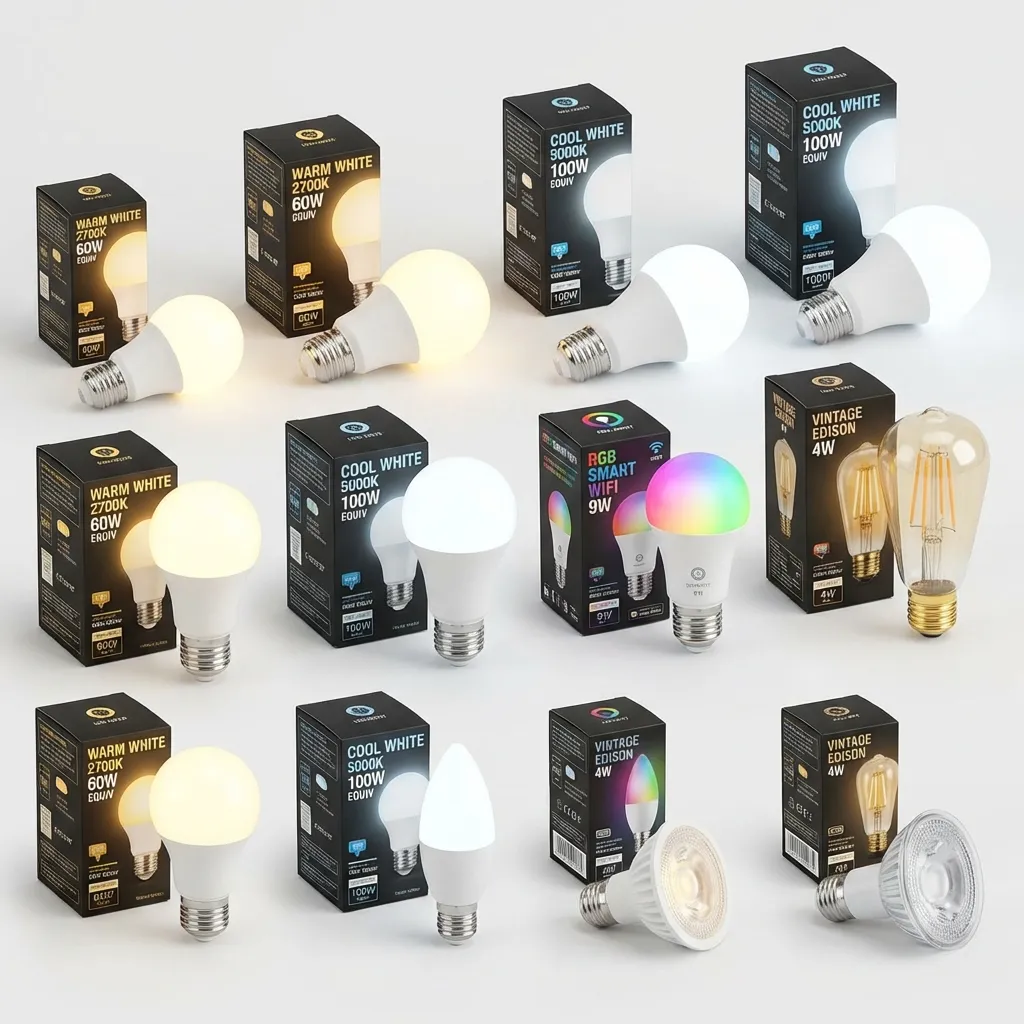
LED bulbs have replaced traditional incandescent bulbs thanks to their energy efficiency and long lifespan. However, there are many technical details to consider when choosing an LED bulb. Selecting the wrong LED will neither provide the expected lighting nor deliver the energy savings advantage. In this comprehensive guide, we will explain in full detail how to choose the LED bulb that suits your needs.
What Is an LED Bulb and How Does It Work?
LED (Light Emitting Diode) is a semiconductor device that produces light when an electric current passes through it. Unlike incandescent bulbs, it contains no filament and converts most of its energy into light rather than heat. For this reason, LED bulbs:
- Consume 80-90% less energy
- Have a lifespan of 25,000-50,000 hours (an incandescent bulb lasts 1,000 hours)
- Generate much less heat and have no risk of bursting
- Reach full brightness instantly
- Are more durable and resistant to vibration
Key Features to Consider When Choosing an LED Bulb
1. Lumen Value (Brightness)
The most common mistake when choosing an LED bulb is looking at the wattage. In fact, it is the lumen value that determines brightness. Watts only indicate energy consumption. The watt-brightness relationship we were accustomed to with incandescent bulbs does not apply to LEDs.
Incandescent to LED Conversion Table:
- 450 lumens = 40W incandescent = 4-5W LED
- 800 lumens = 60W incandescent = 8-9W LED
- 1,100 lumens = 75W incandescent = 11-12W LED
- 1,600 lumens = 100W incandescent = 14-16W LED
- 2,600 lumens = 150W incandescent = 20-25W LED
Recommended total lumen values by room size:
- Bedroom: 100-150 lumens per square metre
- Living room: 150-200 lumens per square metre
- Kitchen: 200-300 lumens per square metre
- Bathroom: 200-250 lumens per square metre
- Study/Office: 300-500 lumens per square metre
2. Colour Temperature (Kelvin)
Colour temperature determines whether light appears warm (yellowish) or cool (bluish). It is measured in Kelvin (K) and is the most confusing aspect of LED bulb selection.
- 2700K - Warm White: The closest colour to an incandescent bulb. Gives a yellowish, soothing light. Ideal for bedrooms, living rooms, and relaxation areas. Creates an intimate and peaceful atmosphere.
- 3000K - Soft White: Slightly whiter than 2700K but still warm in character. Frequently used in hotel rooms and boutique shops.
- 4000K - Natural White: Neither warm nor cool, a balanced white light. Suitable for kitchens, bathrooms, and dressing rooms. Shows colours naturally.
- 5000K - Daylight: Bright, energetic white. Suitable for garages, workshops, and hobby rooms. Ideal for tasks requiring attention to detail.
- 6500K - Cool White: Bluish white, the most energising colour. Preferred for offices, hospitals, and industrial areas. Prolonged exposure can cause eye fatigue.
Important: All bulbs in the same room should have the same colour temperature. Different Kelvin values look unpleasant to the eye and create a disturbing effect.
3. CRI - Colour Rendering Index
CRI (Colour Rendering Index) measures how accurately a light source shows the true colours of objects. It is rated on a scale of 0-100; sunlight has a CRI value of 100.
- CRI 80+: The acceptable minimum value for general home use
- CRI 90+: High quality, should be preferred for natural colour appearance
- CRI 95+: Professional use, art galleries, photography studios
Under low CRI bulbs, skin looks pale and food appears dull. Especially for kitchens, bathroom mirrors, and dressing rooms, choose CRI 90+ bulbs.
4. Dimmer Compatibility
Not all LED bulbs work with a dimmer. If you want to use a dimmer, make sure to select a bulb labelled "Dimmable". Using a regular LED bulb with a dimmer will:
- Cause the bulb to flicker
- Produce a buzzing sound
- Shorten the bulb's lifespan
- Potentially damage the dimmer
Additionally, older TRIAC dimmers may not be fully compatible with LEDs. You may need to use an LED-compatible dimmer.
5. Socket Type
Before purchasing a bulb, check your fixture's socket type. The most common socket types are:
- E27: Standard screw socket, the most common type. Most ceiling lamps and table lamps.
- E14: Small screw socket (candle bulb). Chandeliers, lampshades, night lights.
- GU10: Two-pin spotlight socket. Recessed spotlights and track systems.
- GU5.3 (MR16): 12V spotlight bulb. Older spotlight systems.
- G9: Small capsule bulb. Decorative fixtures.
- G4: Very small 12V bulb. Under-counter lighting.
- R7s: Double-ended linear bulb. Floodlights.
6. Beam Angle
The beam angle indicates how wide an area the bulb spreads its light over:
- 360 degrees (Omnidirectional): For general lighting. Ceiling lamps, pendants.
- 180 degrees: Hemisphere lighting. Wall sconces.
- 120 degrees: Standard spot angle. The most common for recessed spotlights.
- 60 degrees: Medium spot angle. Accent lighting.
- 38 degrees and below: Narrow spot angle. Picture lighting, display highlighting.
7. Energy Class
According to the European Union energy labelling system, LED bulbs are classified from A to G. The most efficient bulbs are in classes A and B. Since 2021, the new labelling system has been in use; the old A+ and A++ classes have been removed.
Recommended LED Bulb Brands
A quality LED bulb both lasts longer and provides better light quality. Trusted brands include:
- Philips: Market leader, wide product range, high CRI values
- Osram: German quality, professional lighting solutions
- Samsung: Leader in LED chip production, long warranty periods
- GE Lighting: American brand, innovative technologies
- Xiaomi Yeelight: Smart home integration, affordable pricing
- IKEA: Affordable price, good quality, easy accessibility
Common Mistakes
- Only looking at wattage and ignoring the lumen value
- Using bulbs with different colour temperatures in the same room
- Trying to use a regular LED with a dimmer
- Installing an LED that is not suitable for enclosed fixtures (some LEDs overheat in closed fixtures)
- Buying very cheap, unbranded LEDs (short lifespan, low CRI, flickering issues)
LED Lighting Consultation
Let us plan the most suitable LED lighting solution for your home or workplace together.
0507 415 29 92
