
What Is an RCD (Residual Current Device)? A Life-Saving Safety Device
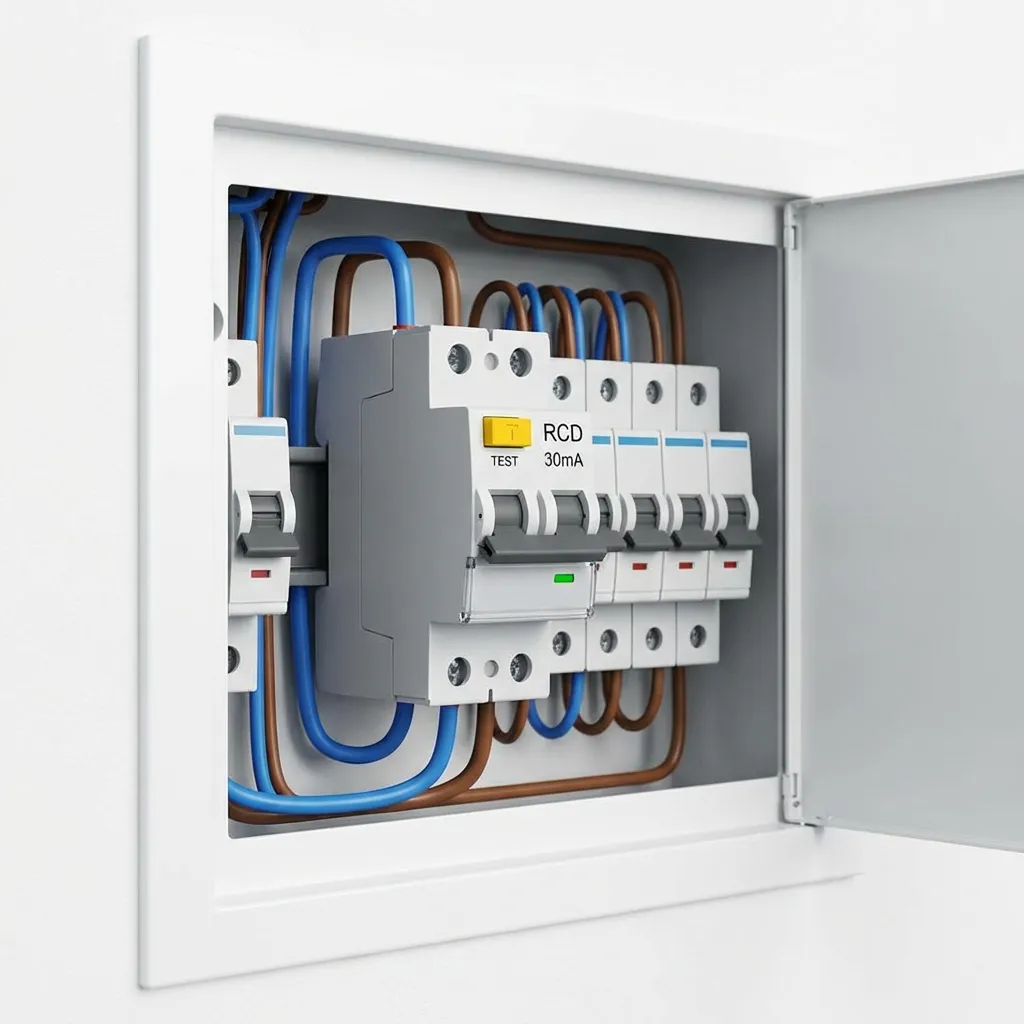
A Residual Current Device (RCD), also known as a safety switch or leakage current relay, is one of the most important safety devices in any electrical installation, saving thousands of lives every year. The vast majority of electrocution deaths occur in buildings that either lack an RCD or have a malfunctioning one. In this comprehensive guide, we will cover what an RCD is, how it works, the different types available, and the maintenance requirements you should be aware of.
What Is an RCD?
A Residual Current Device (RCD), sometimes called an RCCB (Residual Current Circuit Breaker), is an automatic safety device that detects leakage currents in an electrical installation and disconnects the circuit within milliseconds. It is also commonly referred to as a "safety switch" or "earth leakage circuit breaker."
While a standard fuse or circuit breaker only protects against overcurrent, an RCD detects when electricity strays from its intended path (leakage). This distinction is critical because during an electric shock event, the current level may not be high enough to trip a standard fuse, yet it can still be lethal to a human being.
How Does an RCD Work?
The operating principle of an RCD is remarkably simple yet highly effective:
- Current Monitoring: A toroidal (ring-shaped) transformer inside the RCD continuously compares the current flowing through the live wire with the current returning through the neutral wire.
- Normal Condition: Under normal operation, the current entering through the live wire returns fully through the neutral wire. Since both currents are equal, the net magnetic field in the transformer is zero.
- Leakage Condition: When electricity leaks to earth through some path (a human body, a wet surface, damaged insulation), the current returning through the neutral decreases. This difference creates an imbalance in the transformer.
- Disconnection: When the imbalance exceeds the set threshold (e.g., 30mA), the RCD mechanism is triggered and the circuit is disconnected within 25-40 milliseconds.
Why is 30mA important? A current exceeding 30mA passing through the human body can cause muscle contractions and cardiac arrhythmia. Currents above 100mA are generally fatal. A 30mA-rated RCD disconnects the circuit before the current reaches dangerous levels.
Types of RCDs
By Sensitivity
- 10mA - Ultra Sensitive: Designed for particularly high-risk environments (operating theatres, intensive care units). May cause nuisance tripping in residential settings.
- 30mA - Personal Protection: The standard value for human safety. Required for bathrooms, kitchens, bedrooms, and children's rooms. Every home should have one.
- 100mA - Medium Sensitivity: For general use; less sensitive but still protective. Preferred in some industrial applications.
- 300mA - Fire Protection: Insufficient for direct personal protection but effective at protecting the installation from fire. Used as secondary protection on the main panel.
By Type
- Type AC: Detects only sinusoidal (AC) leakage currents. The most common and economical type. Sufficient for most household appliances.
- Type A: Detects both AC and pulsating DC leakage currents. Recommended for devices with variable-frequency motors (inverter air conditioners, washing machines).
- Type B: Detects AC, pulsating DC, and smooth DC leakage currents. Required for photovoltaic systems and electric vehicle charging stations.
- Type F: An advanced version of Type A that also detects high-frequency leakage. Ideal for inverter-driven appliances.
By Construction
- RCCB (Pure RCD): Provides only leakage current protection, with no overcurrent protection. Must be used in combination with a fuse or circuit breaker.
- RCBO: Combines leakage current protection and overcurrent protection in a single device. Provides individual protection for each circuit and is the preferred solution.
- RCD Socket Outlet: An RCD integrated into a power outlet. Easy to add to older installations.
Why Is an RCD Necessary?
1. Personal Safety
It is the most effective method of protection against electric shock. A 30mA RCD disconnects the circuit in under 40 milliseconds upon contact with electricity - before cardiac fibrillation can occur.
2. Fire Prevention
Leakage currents generate heat at the points where they flow. Over time, this heat can ignite flammable materials. A 300mA fire protection RCD minimises this risk.
3. Equipment Protection
Leakage current can damage the motors and electronic circuits of electrical devices. An RCD prevents this damage and extends the lifespan of your appliances.
4. Legal Requirement
According to Turkish Electrical Installation Regulations, a 30mA RCD is mandatory in new buildings. It must be present in high-risk areas such as bathrooms, wet floors, and garden lighting circuits.
Why Does an RCD Trip?
The RCD tripping does not always mean there is a problem - that is its primary function. However, frequent tripping indicates an underlying issue:
Appliance-Related Causes
- Faulty white goods: Washing machine, dishwasher, electric oven motor or heating element faults
- Moisture-affected appliances: Water heaters, boilers, and bathroom heaters exposed to moisture
- Old appliances: Electrical devices with aged insulation
- Extension leads: Damaged or poor-quality extension cables
Installation-Related Causes
- Cable insulation damage: Ageing, rodent damage, mechanical wear
- Damp environments: Water ingress into junction boxes or sockets
- Outdoor lighting: Rainwater infiltration
- Underground cables: Soil moisture effects
RCD-Related Causes
- Old or faulty RCD unit
- Incorrect type or sensitivity selection
- Dust and moisture build-up inside the RCD
RCD Testing
Every RCD has a button marked 'T' or 'Test' on it. When pressed, this button creates an artificial leakage current to test the mechanism.
How to Test
- Make sure the RCD is in the ON position
- Press the Test button
- The RCD should trip immediately (the switch should drop down)
- Reset the RCD to the ON position
Testing Frequency
It is recommended to test once a month. If the RCD does not trip when the test button is pressed, the device is faulty and must be replaced immediately.
Choosing the Right RCD
- Residential use: 30mA, Type A or AC, 2-pole (single phase) or 4-pole (three phase)
- Bathroom and kitchen: 30mA mandatory, Type A preferred
- Inverter-driven appliances: Type A or Type F
- Solar power systems: Type B
- Whole-home protection: 300mA fire protection + 30mA personal protection (tiered approach)
Important Warnings
- If your RCD is tripping constantly, it means there is a serious electrical problem. Do not bypass or disable the RCD and continue using the installation!
- An RCD does not replace a grounding system. Both are required.
- An RCD with a non-functional test button must be replaced immediately.
- Installation must always be carried out by a qualified electrician.
RCD Installation and Fault Detection
Get professional service for RCD installation, testing, and fault detection in Antalya.
0507 415 29 92
